Making the intuitive teachable
Clarity in the mind creates freedom in the body.
The Sachiko Method is an approach to piano playing and musical development created by concert pianist and educator Sachiko Kato. Developed through decades of performing, practicing, and teaching, it seeks to make the intuitive musical and physical processes of exceptionally gifted musicians explicit and teachable.
The method helps students develop a clearer understanding of music, a more conscious connection between the mind and body, and the freedom to discover their own individual musical voices.
Every Student Has a Musical Voice
I believe that music-making should feel natural to everyone. Each person possesses a unique musical voice, but that voice is not always easy to access. Technical difficulties, uncertainty, and the demands of reading and coordinating music can sometimes stand between a student and the expression they wish to communicate.
My goal is to help students discover and develop that voice. I do not believe that musical education should be limited to reproducing the correct notes or imitating someone else’s interpretation. A student should gradually learn to hear, understand, and express music in a way that is meaningful and individual.
The Sachiko Method provides tools for making the process of music-making more conscious. By learning how to prepare sound, rhythm, and movement before playing, students can develop greater clarity, coordination, and expressive freedom.
The purpose is not to make every student sound alike or to promise that everyone will become a prodigy. It is to help each person develop their own musical potential.
The Origins of the Method
Throughout my life as a pianist, I have been fascinated by the way exceptional musicians seem able to translate musical ideas into sound with remarkable ease. What appears effortless from the outside often involves an intricate coordination of hearing, understanding, anticipation, and physical movement.
As a teacher, I began to ask: Can these processes be identified and explained? Can students who do not arrive at the piano with the same degree of natural intuition learn to develop them consciously?
The Sachiko Method grew from these questions and from my work with students of different ages and abilities. It is an ongoing exploration of how musical understanding can guide physical action, and how greater mental clarity can support more natural, expressive playing.
The Three Core Principles
- Naming the Notes
Knowing the notes is different from merely recognizing them on the page. Students learn to identify and verbalize notes, preferably through fixed-do solfège, so that musical information becomes active in the mind.
Saying or singing note names helps students develop awareness of pitch, direction, and musical patterns. Solfège singing also supports ear training, strengthening the connection between the written score and the sound imagined internally.
The aim is to move beyond passive recognition toward a clearer sense of what is coming next. - Counting Aloud
Rhythm is not simply a matter of keeping time; it organizes coordination and gives music its structure and direction.
Counting aloud helps students become aware of the relationship between notes, beats, and movement. It can reveal uncertainties that might otherwise be hidden by playing on automatic pilot and provides a framework for coordinating the hands.
As rhythmic understanding becomes more secure, students can develop a more reliable internal sense of time and greater freedom in musical phrasing. - Visualizing Movement
Before a sound is produced, the mind can prepare the movement required to create it. Students learn to anticipate fingering, hand positions, intervals, leaps, and the movement of the fingers, wrists, and arms.
This includes developing awareness of where the hand is going before it moves and preparing the next action rather than reacting only after the previous note has been played.
When movement is guided by a clear musical intention, the body has less need to compensate for uncertainty. This can help reduce unnecessary tension and support more efficient, coordinated playing.
Understand First. Repeat Second.
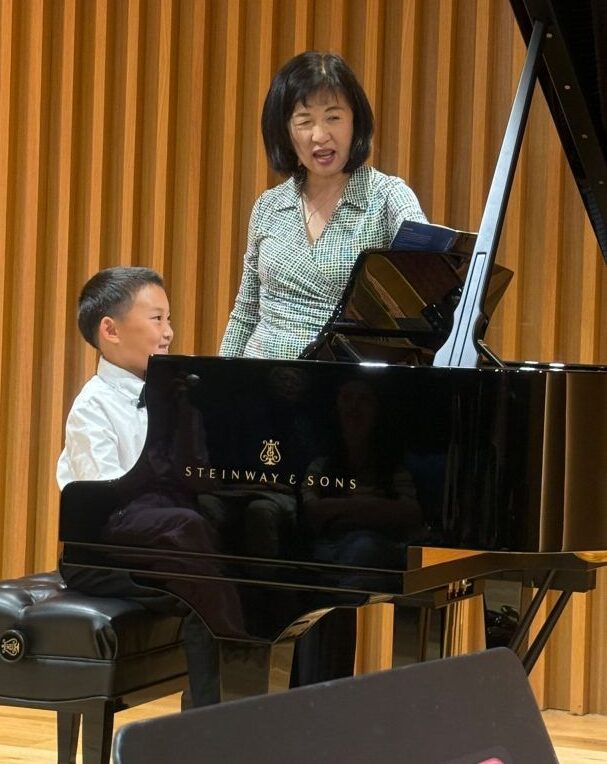
Repetition is an essential part of learning, but repetition alone does not guarantee progress. When a passage does not work, the first question should not simply be, “How many more times should I play it?”
Instead, students learn to ask:
- What did I intend to hear?
- Did I know the notes and rhythm clearly?
- Was the fingering or movement prepared?
- Where did the coordination become uncertain?
Once the difficulty has been identified, repetition becomes more purposeful. The student is no longer merely repeating an action, but reinforcing a clearer understanding.
Understand first. Repeat second.
From Mental Clarity to Physical Freedom
One of the central ideas of The Sachiko Method is that the mind should guide the body rather than leaving the hands to solve every problem through trial and error.
When a student is uncertain about the next note, rhythm, or movement, the body may respond with hesitation, excessive effort, or unnecessary tension. By preparing the musical intention and physical action more clearly, students can often discover a more natural way to play.
This does not mean that all physical tension has a single cause or that mental preparation replaces the need for sound technical guidance. Rather, the method explores how awareness, coordination, and musical understanding can work together to support freedom of movement.
The ultimate goal is not movement for its own sake, but the ability to translate musical imagination into sound.
Hearing Before Playing
Musical expression begins with the ability to imagine sound. Students are encouraged to listen internally, sing, and consider the character and direction of a phrase before playing it.
The method includes exercises that bring attention to the relationship between hearing and action, such as verbalizing notes before playing, coordinating solfège with the opposite hand, and practicing selected passages with the eyes closed to test the clarity of mental preparation.
These exercises are not ends in themselves. They are tools for developing independence, awareness, and a deeper connection to the music.
Discovering an Individual Voice
Technique and musical expression are not separate pursuits. A pianist’s ability to communicate depends in part on the freedom to realize what they hear and imagine.
As students become more secure in their understanding of the score and their physical coordination, they can devote more attention to phrasing, tone color, timing, and the expressive possibilities of the music.
The Sachiko Method encourages students to listen more deeply and to make their own musical decisions. The goal is not to produce a prescribed sound, but to help each student discover the sound and expression that are uniquely their own.
The Method in Practice
The principles of The Sachiko Method are adapted to the needs, age, and experience of each student. They may be applied to beginning study, advanced repertoire, technical development, or the refinement of musical interpretation.
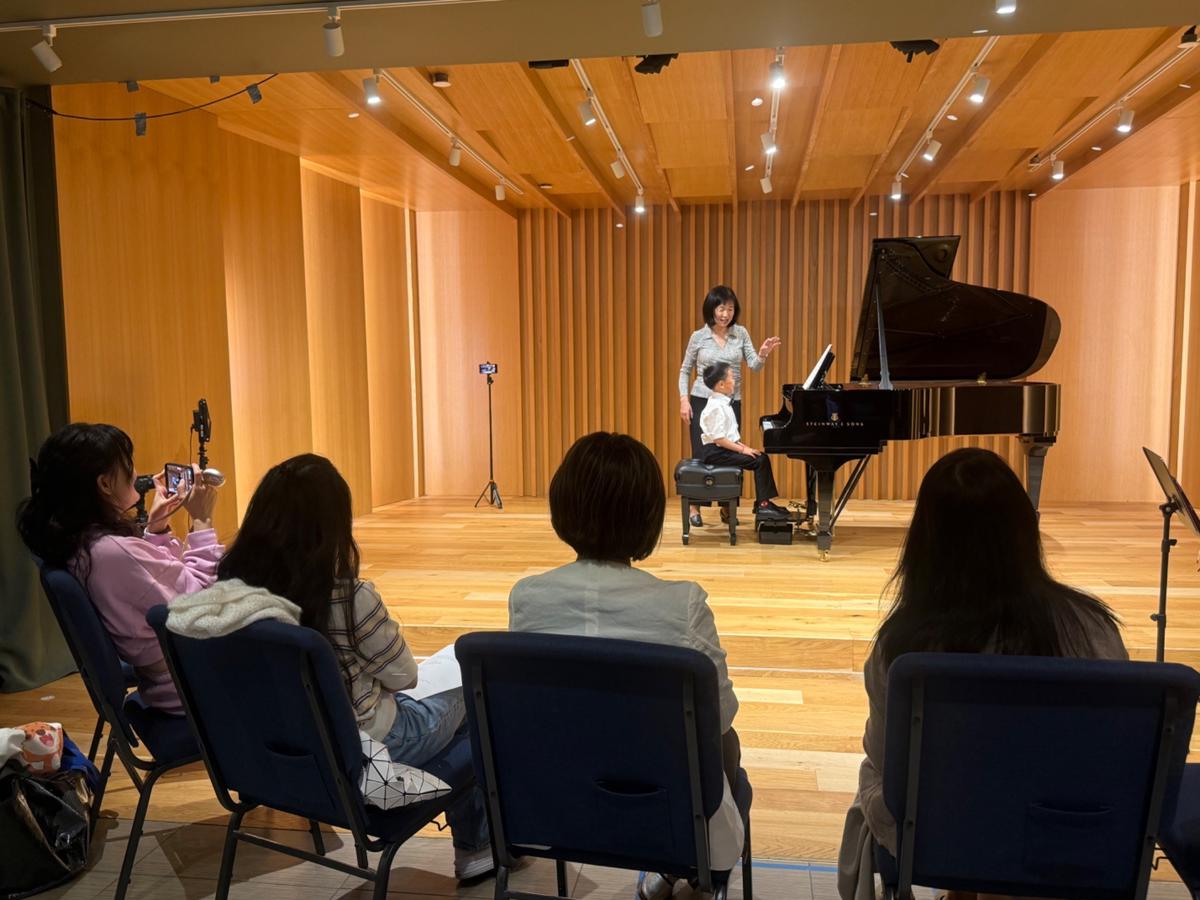
Through private instruction, intensive coaching, workshops, and masterclasses, Kato works with students and teachers to explore how greater clarity can transform the process of practicing and performing.
The method continues to evolve through her own artistic practice and her work with students.
The Book and Future Resources
Sachiko Kato is the author of The Sachiko Method: How to Find the Music Within You, which explores the ideas behind her approach to practicing, musical understanding, and discovering one’s individual musical voice.
Her work continues through writing, performance demonstrations, workshops, and the development of additional educational resources.
This website will serve as the home for articles and videos exploring the principles of the method, practical approaches to piano study, and reflections on the relationship between musical imagination and physical expression.
Study and Workshop Inquiries
For private piano lessons and intensive coaching, please visit Hudson Piano Academy. For inquiries about workshops, masterclasses, and professional collaborations, please contact Sachiko Kato.